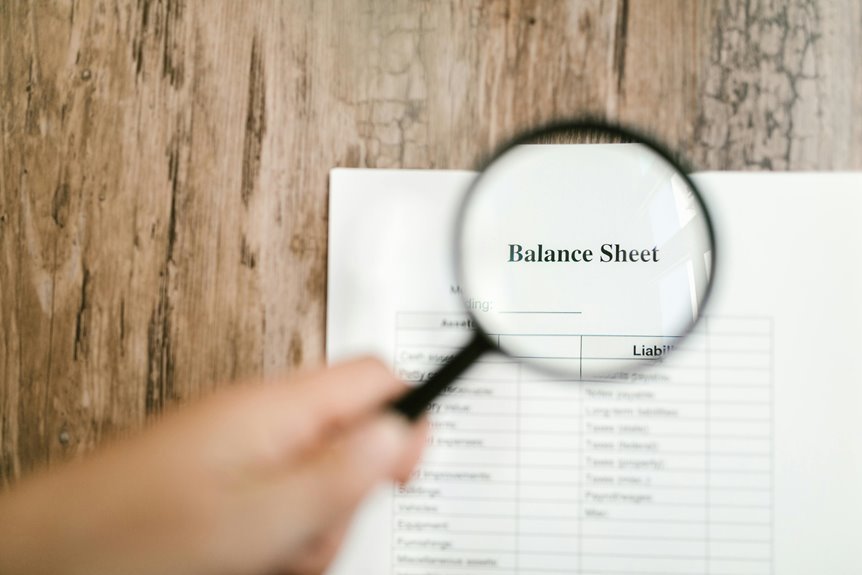
A balance sheet provides a concise overview of an entity’s financial condition at a specific point in time. It categorizes assets, liabilities, and equity, offering insights into liquidity and solvency. Understanding these components is essential for stakeholders to gauge financial stability. Moreover, the effective interpretation of balance sheet figures can influence strategic decisions. However, how do these insights translate into practical applications for organizations?
Key Components of a Balance Sheet
The balance sheet serves as a critical financial statement that provides a snapshot of an entity’s financial position at a specific point in time.
It consists of three main components: assets, which represent resources owned; liabilities, indicating obligations owed; and the equity section, reflecting the residual interest of owners.
Together, these elements illustrate the financial health and stability of the entity.
Interpreting Balance Sheet Figures
Analyzing balance sheet figures requires a methodical approach to understand the financial standing of an entity.
Effective balance sheet analysis involves evaluating assets, liabilities, and equity, providing insights into liquidity and solvency.
Financial ratios, such as the current ratio and debt-to-equity ratio, further enhance interpretation by offering comparative benchmarks.
This analytical perspective enables informed assessments of financial health, fostering objective decision-making.
Practical Applications in Decision-Making
Utilizing balance sheet insights can significantly enhance decision-making processes within organizations.
By assessing financial health through key metrics, executives can make informed choices regarding resource allocation, risk management, and strategic planning.
Furthermore, balance sheets facilitate investment analysis, allowing stakeholders to evaluate potential returns and ascertain the viability of projects.
Consequently, leveraging this financial data fosters an environment conducive to sustainable growth and innovation.
Conclusion
In conclusion, a balance sheet functions like a financial map, guiding organizations through the complexities of their economic landscape. By understanding its key components and interpreting the figures accurately, businesses can navigate their financial health with precision. The insights drawn from balance sheet analysis empower decision-makers to allocate resources effectively, manage risks, and strategize for growth. Ultimately, leveraging this vital tool can lead to informed choices that support a company’s long-term sustainability and success.