Selecting ansi cut level gloves with the right cut rating for your specific work environment is one of the most important decisions in workplace hand safety. Too low a cut level leaves workers vulnerable; unnecessarily high cut levels can result in gloves that are stiff, expensive, and difficult for workers to wear consistently.
Breaking Down ANSI Cut Levels
A1 Through A9 Explained
The ANSI/ISEA 105 cut resistance scale ranges from A1 (200 grams cut force) to A9 (6,000 grams cut force). Each step represents a meaningful increase in protective capability. A3 gloves, for example, might suit light assembly work; A6 through A9 ratings are typical for sheet metal work, glass handling, and other high-cut environments.
The test that generates these ratings uses a rotating blade under a specified weight. The result is consistent and reproducible, making it a reliable basis for comparing products across manufacturers — though real-world performance will always involve additional variables.
Common Applications by Cut Level
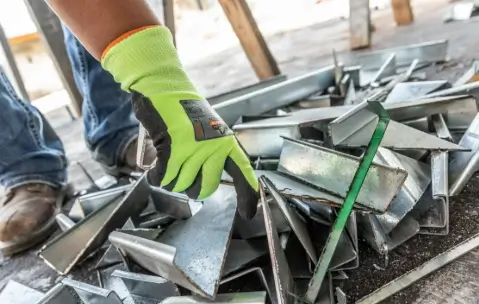
Different industries tend to require different cut levels based on their typical hazard profiles. Light assembly, packaging, and general manufacturing typically suit A2 to A4 rated gloves. Automotive assembly and sheet metal work often require A4 to A6. Glass handling and metal stamping typically call for A6 to A8. The most demanding metal fabrication environments may specify A9.
These are general guidelines rather than fixed rules. A thorough hazard assessment for each specific task is always the most reliable way to determine the appropriate cut level.
Balancing Cut Level with Comfort and Compliance
The highest cut-level gloves use thick, stiff composite materials that significantly reduce dexterity. For tasks requiring fine motor skills — operating small tools, manipulating electronic components, or performing quality inspection — a moderate cut level that permits adequate dexterity may be a better real-world safety choice than a maximum-rated glove that workers remove to perform certain tasks.
The key metric for any glove selection is compliance: if workers wear the glove consistently throughout the shift, a moderate protection level is far more effective than superior protection that sits unused.
See also: The Rise of Green Tech: How Technology Is Fighting Climate Change
Frequently Asked Questions
Q: Is a higher ANSI cut level always better?
A: Not necessarily. Higher cut levels typically come with reduced dexterity. The optimal cut level is the lowest one that provides adequate protection for the specific hazard, as this usually results in better comfort and more consistent use.
Q: How do I know which cut level my workplace requires?
A: Conduct a hazard assessment that identifies the materials being handled, the nature of the cutting exposure, and the consequences of a glove failure. Consult with your glove supplier or a safety professional if you’re uncertain.
Q: Can I mix and match cut levels for different tasks on the same site?
A: Yes, and this is often the recommended approach. Using task-specific gloves ensures appropriate protection for each activity rather than defaulting to a single specification that may over-protect for some tasks and under-protect for others.
Conclusion
ANSI cut level gloves provide a reliable, standardized foundation for hand protection decisions. By understanding what each level represents, how it maps to common industry applications, and how to balance protection with usability, safety managers can build a glove program that delivers genuine protection while maintaining the worker compliance that makes protection real.